Music Mastering Tips for Emerging Artists
Mastering can be a daunting step in the music production process, especially for emerging artists who are delving into the world of creating polished, radio-ready tracks. This article will explore essential music mastering tips to help you elevate your sound and ensure your music stands out in the competitive music industry.
Understanding the Basics of Music Mastering
Mastering is the final step in audio post-production. It ensures that your track sounds consistent across different playback systems. For emerging artists, grasping the foundational principles of EQ, compression, and stereo enhancement is essential to getting started.
When you're new to music mastering, it can be helpful to start with the basics. Think of it as putting the final touches on a painting—you want the picture to be as clear and impactful as possible. This phase adjusts the audio for uniform sound quality, loudness, and pricing of tracks. It filters the sonic anomalies and smooths the overall sound profile. But what exactly are these processes? Mastering involves a series of fine adjustments to bring forth the best potential in your mixes and give them the competitive edge they need [1]. By focusing on aspects such as frequency balance and dynamic range, you manage to enhance the musical experience for your audience.
A big part of mastering is ensuring that the song maintains its emotional impact and clarity across various sound systems—be it small earbuds or high-end stereos. The adjustments you make during mastering not only highlight the best parts of your track but also ensure your music maintains its consistency and structure when it reaches the listener's ear.
Setting Up Your Mastering Environment
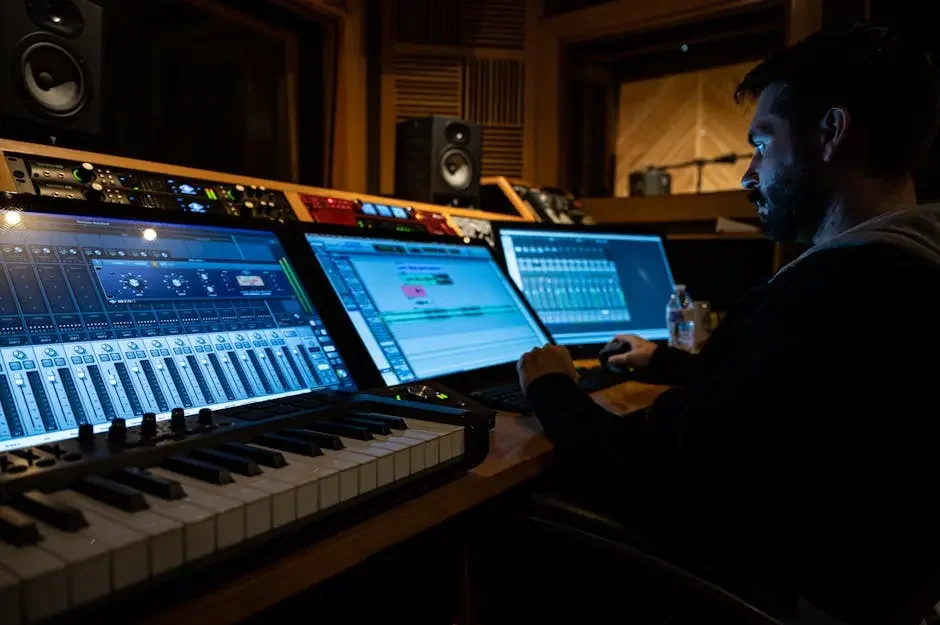
A good mastering environment is fundamental for clarity and precision. Investing in quality studio monitors, headphones, and acoustic treatment can significantly impact your ability to create balanced tracks.
The environment in which you master your tracks is just as critical as the technical skills you apply. Consider your workspace as a blank canvas—it should be free from audio distractions that can alter your perception of the mix. Begin by evaluating your room acoustics. Poor room acoustics can cause your music to sound boomy, or the opposite, overly tinny. To combat this, treatment options like bass traps, acoustic panels, and diffusers can be used to create an optimal listening environment [2]. These options vary in budget, so it's possible to adjust according to what suits your needs.
Moreover, selecting quality studio monitors is essential for accuracy—this will allow you to make fine-tuned adjustments to ensure your music sounds great on any playback system. Headphones are also useful, particularly for spotting minute details that could be missed when listening through speakers.
The Importance of Reference Tracks
Reference tracks are vital in providing a benchmark for your mastering process. By comparing your music to professionally mastered tracks, you can identify areas that need improvement and ensure your sound is up to standard.
Using reference tracks is akin to keeping a roadmap at hand when you're exploring unfamiliar territory. They serve as guides to ensure your track competes in terms of loudness, balance, and tonal qualities with tracks that have succeeded before [3]. This is especially beneficial when venturing into new genres or experimenting with different sounds. Hearing how other artists' tracks flow and resonate on various listening devices provides insight into what listeners expect and enjoy, ensuring your track is both unique and competitive.
Using EQ and Compression Wisely
EQ and compression are two powerful tools in mastering. Learning how to use them effectively can shape the tone and dynamic range of your track, making it pleasant to listen to across different audio systems.
Equalization (EQ) balances the frequencies in your music, allowing every element of your track to shine without overpowering others. It's like crafting the layers of a sculpture where each part plays its role without overshadowing the whole piece. Compression, on the other hand, is about dynamic control, ensuring the highs and lows of your music create that emotional punch without causing listening fatigue [4]. Mastering these tools can make a crucial difference in how your final product sounds. Being subtle in adjustments often yields the best results, ensuring a natural and engaging listening experience.
Finalizing with Limiting and Loudness
Limiting is crucial in achieving the desired loudness level for your music. Ensuring your track is loud enough while maintaining dynamics is vital for attracting listeners and keeping their engagement.
Finalizing your track is where you aim to make it fit within the industry standards, especially in terms of loudness. Applying a limiter can raise the overall volume without distorting the audio, maintaining the dynamics that breathe life into your music [5]. This step also ensures that your track doesn't clip, which can lead to undesirable audio distortion. Pay careful attention to the balance between achieving a full sound and preserving the intricacies of your mix. Over-limiting can rob your track of its natural dynamics, so the aim is to strike that perfect middle ground.
Wrapping Up Your Mastering Journey
Music mastering is a crucial step in the journey of music production. For emerging artists, understanding the basics and applying these practical tips can transform your tracks into professional-sounding compositions. As you hone your skills, remember that mastering is an art, and with patience and practice, it becomes an integral part of your creative process. Consider taking a step further and exploring our mastering services for personalized guidance.